Story code: ST-000788
Part 1: Seconds on the Clock
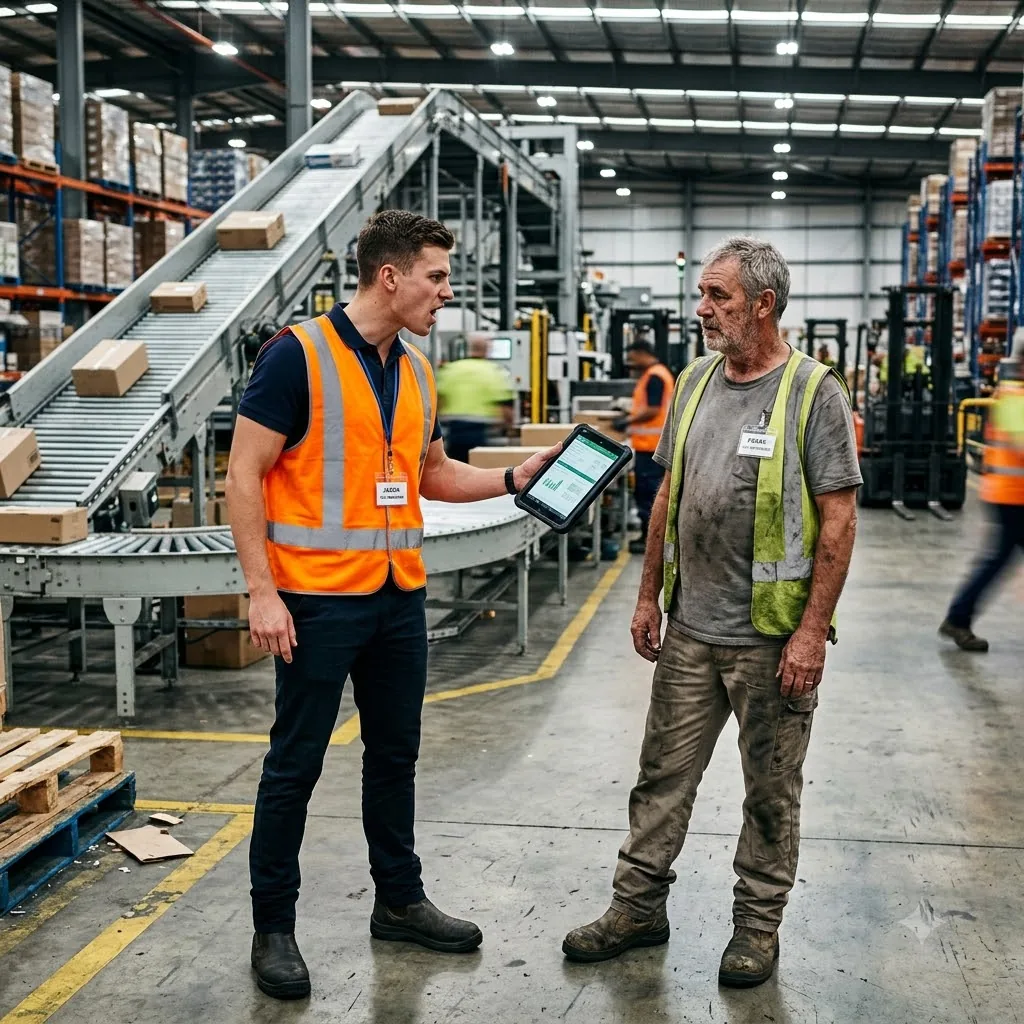
The main belt on Line 4 roared with a relentless, grinding mechanical scream, but Bryce still managed to pitch his voice loud enough for the entire alpha shift to hear. He stood dead center in the sorting aisle, jabbing a manicured finger at the glowing screen of his company-issued tablet. Frank shifted his weight to his left leg, trying to take the pressure off his right knee. It felt as though the joint was packed with crushed glass. He was fifty-eight years old, and the unyielding warehouse floor had been slowly dismantling his cartilage for a decade.
Bryce did not care about cartilage or decades of service. Bryce cared exclusively about the decimal points glowing on his screen. The twenty-four-year-old floor manager adjusted his pristine yellow safety vest and read the digits aloud, pacing back and forth so the thirty other pickers on the line could fully absorb the lesson.
“Four hundred and twelve seconds,” Bryce shouted over the deafening clatter of the pneumatic rollers. “That is your Time Off Task for this week, Frank. Four hundred and twelve seconds of company time where your scanner was completely dead.”
Frank kept his mouth shut. He stared straight ahead. The rest of the crew stood completely frozen at their stations. They held their barcode guns and empty flattened cardboard boxes tight against their chests, looking anywhere but at Frank. Humiliation was a standard management tool in this sector. It was designed to keep everyone else moving fast out of sheer terror of being the next one singled out.
“That is almost seven full minutes,” Bryce continued, aggressively swiping to a new screen on his tablet. “Seven minutes of stolen time. You logged ninety seconds of inactivity on Tuesday at fourteen-hundred hours. You logged a hundred and twenty seconds yesterday right before your mandated break. The algorithm flags anyone in the bottom tenth percentile, and you are currently sitting at the absolute bottom of the barrel.”
A sharp spasm ripped through Frank’s right knee, radiating up into his thigh. He gritted his teeth and let his vision drift an inch above Bryce’s gelled hair. Behind the young manager, the massive primary conveyor belt chewed through a mountain of outgoing freight. The belt was a heavy-duty rubber track carrying fifty-pound boxes at a steep thirty-degree incline toward the loading dock doors high on the second level.
Frank watched a specific steel joint connecting the incline framework to the main support stanchion. The heavy retaining bolts on that joint were vibrating. It was not the normal, rhythmic shudder of heavy industrial machinery doing its job. It was a chaotic, high-frequency stutter. The thick metal bracket was blurring at the edges, shaking so hard it was shedding tiny flakes of rusted orange paint onto the concrete below.
“I am talking to you,” Bryce snapped, stepping directly into Frank’s line of sight and blocking his view of the vibrating joint. “Look at me when I am giving you your performance review.”
Frank refocused on the young manager. Bryce’s face was flushed with authority. He was fresh out of a corporate logistics program, armed with optimization spreadsheets and a firm belief that human beings were just fleshy components that needed recalibrating. He did not know the subtle sound of a bearing stripping its housing. He did not know the visual difference between a machine working hard and a machine actively tearing itself apart.
“My knee locked up,” Frank said, keeping his voice low, hoping to de-escalate the very public spectacle. “I had to stretch it out for a minute so I could keep lifting safely.”
“Your knee is not my problem,” Bryce fired back, projecting his voice even louder to ensure the whole floor heard him. “My problem is throughput. My problem is efficiency. We have two thousand units to move before end of shift, and you are dragging my metrics into the dirt.”
Frank leaned slightly to the right, peering past Bryce’s shoulder again. The erratic vibration in the steel bracket was visibly worse now. A dark, jagged line had appeared in the center of the painted gray metal. It was a hairline fracture, expanding and contracting like a breathing lung with every heavy box that slammed onto the incline belt. A fine powder of sheared metal was drifting down from the heavy bolts, coating the floor in a shimmering silver dust.
The belt motors suddenly whined, a high-pitched strain cutting violently through the baseline roar of the warehouse. Frank recognized that specific pitch. He recognized the accumulation of silver dust. He knew exactly what the expanding dark line in that load-bearing bracket meant for the thousands of pounds of fast-moving freight currently suspended in the air.
“You have a terrible attitude,” Bryce said, entirely oblivious to the massive machinery laboring directly behind his own back. “You have had a bad attitude since the day I took over this sector. You think because you have been here ten years you can coast. You think the rules do not apply to your output.”
Frank stayed silent. He watched a massive flat-pack box containing a cast-iron weight set hit the transition point on the incline. As the heavy load rolled over the seam, the fractured bracket shuddered violently. The dark line widened by a visible fraction of a millimeter. Another thick dusting of silver powder rained down onto the concrete.
Bryce slapped the back of his tablet with a sharp, final smack. “I am done giving warnings. I am done having this conversation in front of a crew that actually wants to work. Hand over your scanner and your ID badge right now.”
The main belt on Line 4 roared with a relentless, grinding mechanical scream, but Bryce still managed to pitch his voice loud enough for the entire alpha shift to hear. He stood dead center in the sorting aisle, jabbing a manicured finger at the glowing screen of his company-issued tablet. Frank shifted his weight to his left leg, trying to take the pressure off his right knee. It felt as though the joint was packed with crushed glass. He was fifty-eight years old, and the unyielding warehouse floor had been slowly dismantling his cartilage for a decade.
Bryce did not care about cartilage or decades of service. Bryce cared exclusively about the decimal points glowing on his screen. The twenty-four-year-old floor manager adjusted his pristine yellow safety vest and read the digits aloud, pacing back and forth so the thirty other pickers on the line could fully absorb the lesson.
“Four hundred and twelve seconds,” Bryce shouted over the deafening clatter of the pneumatic rollers. “That is your Time Off Task for this week, Frank. Four hundred and twelve seconds of company time where your scanner was completely dead.”
Frank kept his mouth shut. He stared straight ahead. The rest of the crew stood completely frozen at their stations. They held their barcode guns and empty flattened cardboard boxes tight against their chests, looking anywhere but at Frank. Humiliation was a standard management tool in this sector. It was designed to keep everyone else moving fast out of sheer terror of being the next one singled out.
“That is almost seven full minutes,” Bryce continued, aggressively swiping to a new screen on his tablet. “Seven minutes of stolen time. You logged ninety seconds of inactivity on Tuesday at fourteen-hundred hours. You logged a hundred and twenty seconds yesterday right before your mandated break. The algorithm flags anyone in the bottom tenth percentile, and you are currently sitting at the absolute bottom of the barrel.”
A sharp spasm ripped through Frank’s right knee, radiating up into his thigh. He gritted his teeth and let his vision drift an inch above Bryce’s gelled hair. Behind the young manager, the massive primary conveyor belt chewed through a mountain of outgoing freight. The belt was a heavy-duty rubber track carrying fifty-pound boxes at a steep thirty-degree incline toward the loading dock doors high on the second level.
Frank watched a specific steel joint connecting the incline framework to the main support stanchion. The heavy retaining bolts on that joint were vibrating. It was not the normal, rhythmic shudder of heavy industrial machinery doing its job. It was a chaotic, high-frequency stutter. The thick metal bracket was blurring at the edges, shaking so hard it was shedding tiny flakes of rusted orange paint onto the concrete below.
“I am talking to you,” Bryce snapped, stepping directly into Frank’s line of sight and blocking his view of the vibrating joint. “Look at me when I am giving you your performance review.”
Frank refocused on the young manager. Bryce’s face was flushed with authority. He was fresh out of a corporate logistics program, armed with optimization spreadsheets and a firm belief that human beings were just fleshy components that needed recalibrating. He did not know the subtle sound of a bearing stripping its housing. He did not know the visual difference between a machine working hard and a machine actively tearing itself apart.
“My knee locked up,” Frank said, keeping his voice low, hoping to de-escalate the very public spectacle. “I had to stretch it out for a minute so I could keep lifting safely.”
“Your knee is not my problem,” Bryce fired back, projecting his voice even louder to ensure the whole floor heard him. “My problem is throughput. My problem is efficiency. We have two thousand units to move before end of shift, and you are dragging my metrics into the dirt.”
Frank leaned slightly to the right, peering past Bryce’s shoulder again. The erratic vibration in the steel bracket was visibly worse now. A dark, jagged line had appeared in the center of the painted gray metal. It was a hairline fracture, expanding and contracting like a breathing lung with every heavy box that slammed onto the incline belt. A fine powder of sheared metal was drifting down from the heavy bolts, coating the floor in a shimmering silver dust.
The belt motors suddenly whined, a high-pitched strain cutting violently through the baseline roar of the warehouse. Frank recognized that specific pitch. He recognized the accumulation of silver dust. He knew exactly what the expanding dark line in that load-bearing bracket meant for the thousands of pounds of fast-moving freight currently suspended in the air.
“You have a terrible attitude,” Bryce said, entirely oblivious to the massive machinery laboring directly behind his own back. “You have had a bad attitude since the day I took over this sector. You think because you have been here ten years you can coast. You think the rules do not apply to your output.”
Frank stayed silent. He watched a massive flat-pack box containing a cast-iron weight set hit the transition point on the incline. As the heavy load rolled over the seam, the fractured bracket shuddered violently. The dark line widened by a visible fraction of a millimeter. Another thick dusting of silver powder rained down onto the concrete.
Bryce slapped the back of his tablet with a sharp, final smack. “I am done giving warnings. I am done having this conversation in front of a crew that actually wants to work. Hand over your scanner and your ID badge right now.”