Story code: ST-000962
Part 1: The Upskilling Ledger
The vibration started deep against the bone of Artie’s left ankle, a rhythmic, low-battery buzz that threw off his timing just as he guided the pneumatic press down onto the aluminum solar mount. He locked his jaw, maintaining constant pressure on the dual safety levers while the heavy machinery slammed metal into metal with a deafening crack. The impact rattled up through his forearms, a brutal shockwave that he absorbed with the stoicism of a man who had spent three decades doing exactly this.
“Look at those cycle times, Arthur,” a voice chirped over the industrial roar.
Julian stepped into Artie’s peripheral vision, carrying a tablet and wearing a spotless high-visibility vest that had never seen a drop of machine oil. He tapped his screen, grinning like a proud franchise manager. His hardhat sat perfectly level on his head, free of the scratches and gouges that marked a real worker.
“You are absolute proof that legacy manufacturing talent is the backbone of the green transition,” Julian said, raising his voice to cut through the hiss of the air compressors. “We are upskilling this entire demographic. It is a beautiful thing to watch.”
Artie released the levers and pulled the stamped mounting bracket from the jig. The metal was warm to the touch. He flipped it over, inspecting the tolerances out of pure habit, then tossed it into the completed bin, completely ignoring the supervisor. Reaching down, he discreetly adjusted the thick cuff hidden beneath his denim work pants. The amber light on the plastic housing flashed twice. He had less than three hours before the tracker died and triggered an automated compliance failure. A failure meant a violation, and a violation meant going back inside the wire. He needed a wall outlet, but Julian’s eyes were glued to the productivity dashboard.
This was supposed to be a corporate second chance, a heavily marketed pathway for displaced heavy industry workers to find relevance in the renewable energy sector. That was the brochure version handed out at the courthouse. The reality was a daily financial hemorrhage. Artie was essentially paying to stand on this concrete floor. His monthly auto worker pension-the one he had bled for over thirty years on a union line-was being garnished at the source. The deductions appeared on his digital portal as mandatory facility housing fees, administrative retraining overhead, and the daily lease for the ankle monitor currently vibrating against his leg. He was trapped in a rigged financial loop, working precision metal stamping to pay for the privilege of a court-mandated corporate internship.
“Your efficiency rating is sitting at ninety-four percent,” Julian said, leaning against the yellow safety rail. “If we can push that to ninety-six by the end of the quarter, management might review your tier status. We could even look at adjusting your restitution schedule.”
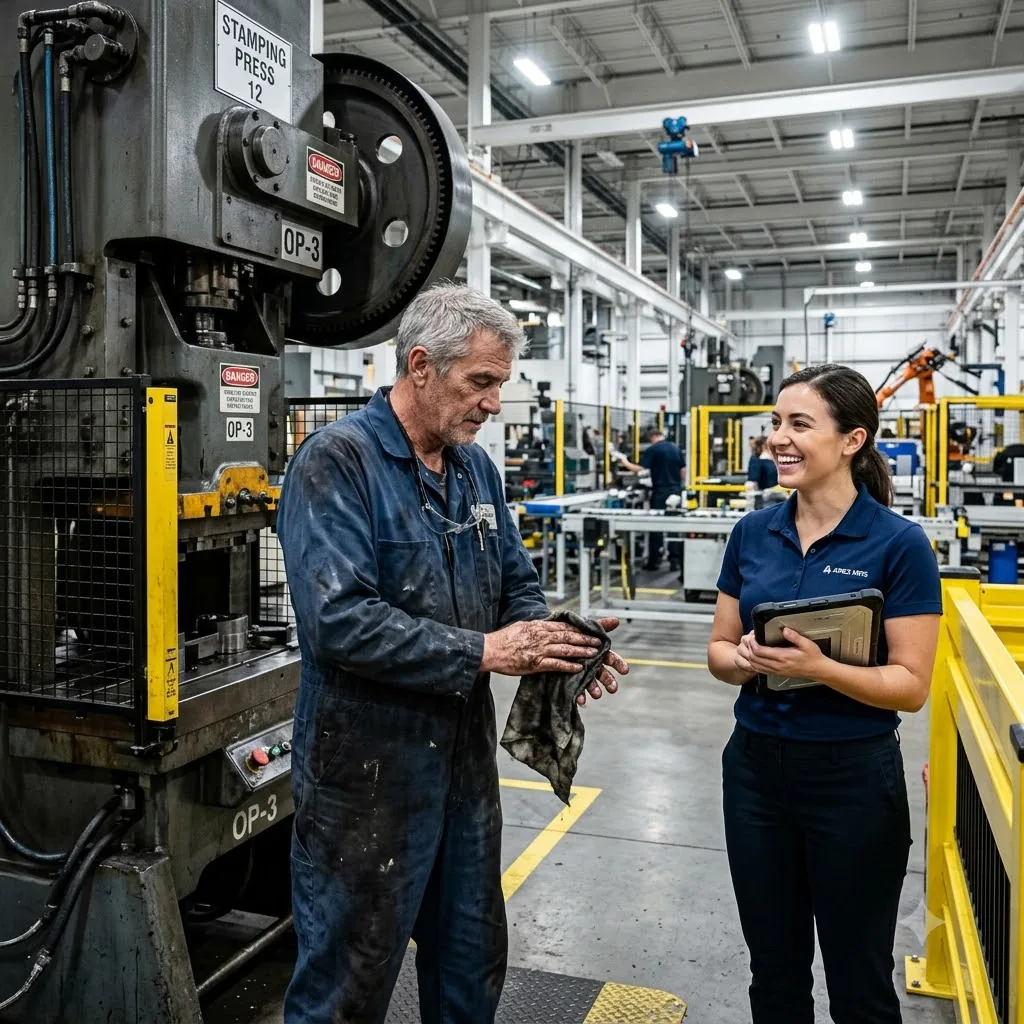
Artie picked up a heavy shop rag and a squirt bottle of industrial solvent. The press was sticking on the upward stroke, leaving a micro-fraction of a delay that Julian’s tablet immediately registered as a worker deficiency. Artie knew heavy machines. He knew when a hydraulic seal was crying out for maintenance, and he knew that this specific piece of equipment was far older than the shiny green-energy banners hanging from the rafters.
“I need to wipe down the guide rails,” Artie said, keeping his tone perfectly flat. “It is catching on the return stroke.”
“Keep it under two minutes,” Julian said, tapping his screen again. “Downtime hurts your daily average. I will log this as basic preventative maintenance so it does not flag the site director.”
Julian strolled away down the line to bother a younger man assembling junction boxes.
Artie squirted the solvent onto the rag. He leaned into the massive iron frame of the press, breathing in the sharp, chemical scent of the degreaser. The machine was coated in years of accumulated grime, painted over with a fresh coat of bright industrial yellow that was already chipping at the corners. The entire facility felt like a theater set constructed over a graveyard. They were building the future, but they were using tools dragged out of the past.
He scrubbed at the thick layer of blackened grease caked around the primary hydraulic cylinder. The solvent cut through the sludge, revealing the dull gleam of brushed steel underneath. He wiped away another layer, pushing hard against the stubborn dirt, using his thumbnail through the cloth to scrape away the hardest deposits.
A metal plate emerged from the grime. It was riveted to the side of the cylinder housing, partially obscured by the sloppy yellow paint job. Artie applied more solvent to the rag and scrubbed the plate vigorously, clearing the stamped indentations of packed dirt.
His hand stopped moving.
He stared at the exposed brass plate. It was not a manufacturer’s standard safety warning or a modern corporate asset tag. He recognized the heavy, blocky font of the stamped characters. He recognized the specific arrangement of the serial number, starting with the three letters designating the specific plant of origin. He rubbed his calloused thumb over the digits, feeling the familiar grooves of a numeric sequence he had memorized thirty years ago on a different assembly line, in a different state, under a completely different set of rules.
His ankle monitor delivered another sharp, low-battery pulse against his skin. Artie kept his thumb pressed hard against the cold metal digits as Julian’s expensive work boots began walking back toward his station.
The vibration started deep against the bone of Artie’s left ankle, a rhythmic, low-battery buzz that threw off his timing just as he guided the pneumatic press down onto the aluminum solar mount. He locked his jaw, maintaining constant pressure on the dual safety levers while the heavy machinery slammed metal into metal with a deafening crack. The impact rattled up through his forearms, a brutal shockwave that he absorbed with the stoicism of a man who had spent three decades doing exactly this.
“Look at those cycle times, Arthur,” a voice chirped over the industrial roar.
Julian stepped into Artie’s peripheral vision, carrying a tablet and wearing a spotless high-visibility vest that had never seen a drop of machine oil. He tapped his screen, grinning like a proud franchise manager. His hardhat sat perfectly level on his head, free of the scratches and gouges that marked a real worker.
“You are absolute proof that legacy manufacturing talent is the backbone of the green transition,” Julian said, raising his voice to cut through the hiss of the air compressors. “We are upskilling this entire demographic. It is a beautiful thing to watch.”
Artie released the levers and pulled the stamped mounting bracket from the jig. The metal was warm to the touch. He flipped it over, inspecting the tolerances out of pure habit, then tossed it into the completed bin, completely ignoring the supervisor. Reaching down, he discreetly adjusted the thick cuff hidden beneath his denim work pants. The amber light on the plastic housing flashed twice. He had less than three hours before the tracker died and triggered an automated compliance failure. A failure meant a violation, and a violation meant going back inside the wire. He needed a wall outlet, but Julian’s eyes were glued to the productivity dashboard.
This was supposed to be a corporate second chance, a heavily marketed pathway for displaced heavy industry workers to find relevance in the renewable energy sector. That was the brochure version handed out at the courthouse. The reality was a daily financial hemorrhage. Artie was essentially paying to stand on this concrete floor. His monthly auto worker pension-the one he had bled for over thirty years on a union line-was being garnished at the source. The deductions appeared on his digital portal as mandatory facility housing fees, administrative retraining overhead, and the daily lease for the ankle monitor currently vibrating against his leg. He was trapped in a rigged financial loop, working precision metal stamping to pay for the privilege of a court-mandated corporate internship.
“Your efficiency rating is sitting at ninety-four percent,” Julian said, leaning against the yellow safety rail. “If we can push that to ninety-six by the end of the quarter, management might review your tier status. We could even look at adjusting your restitution schedule.”
Artie picked up a heavy shop rag and a squirt bottle of industrial solvent. The press was sticking on the upward stroke, leaving a micro-fraction of a delay that Julian’s tablet immediately registered as a worker deficiency. Artie knew heavy machines. He knew when a hydraulic seal was crying out for maintenance, and he knew that this specific piece of equipment was far older than the shiny green-energy banners hanging from the rafters.
“I need to wipe down the guide rails,” Artie said, keeping his tone perfectly flat. “It is catching on the return stroke.”
“Keep it under two minutes,” Julian said, tapping his screen again. “Downtime hurts your daily average. I will log this as basic preventative maintenance so it does not flag the site director.”
Julian strolled away down the line to bother a younger man assembling junction boxes.
Artie squirted the solvent onto the rag. He leaned into the massive iron frame of the press, breathing in the sharp, chemical scent of the degreaser. The machine was coated in years of accumulated grime, painted over with a fresh coat of bright industrial yellow that was already chipping at the corners. The entire facility felt like a theater set constructed over a graveyard. They were building the future, but they were using tools dragged out of the past.
He scrubbed at the thick layer of blackened grease caked around the primary hydraulic cylinder. The solvent cut through the sludge, revealing the dull gleam of brushed steel underneath. He wiped away another layer, pushing hard against the stubborn dirt, using his thumbnail through the cloth to scrape away the hardest deposits.
A metal plate emerged from the grime. It was riveted to the side of the cylinder housing, partially obscured by the sloppy yellow paint job. Artie applied more solvent to the rag and scrubbed the plate vigorously, clearing the stamped indentations of packed dirt.
His hand stopped moving.
He stared at the exposed brass plate. It was not a manufacturer’s standard safety warning or a modern corporate asset tag. He recognized the heavy, blocky font of the stamped characters. He recognized the specific arrangement of the serial number, starting with the three letters designating the specific plant of origin. He rubbed his calloused thumb over the digits, feeling the familiar grooves of a numeric sequence he had memorized thirty years ago on a different assembly line, in a different state, under a completely different set of rules.
His ankle monitor delivered another sharp, low-battery pulse against his skin. Artie kept his thumb pressed hard against the cold metal digits as Julian’s expensive work boots began walking back toward his station.