Story code: ST-000030
Part 1: Distribution Day
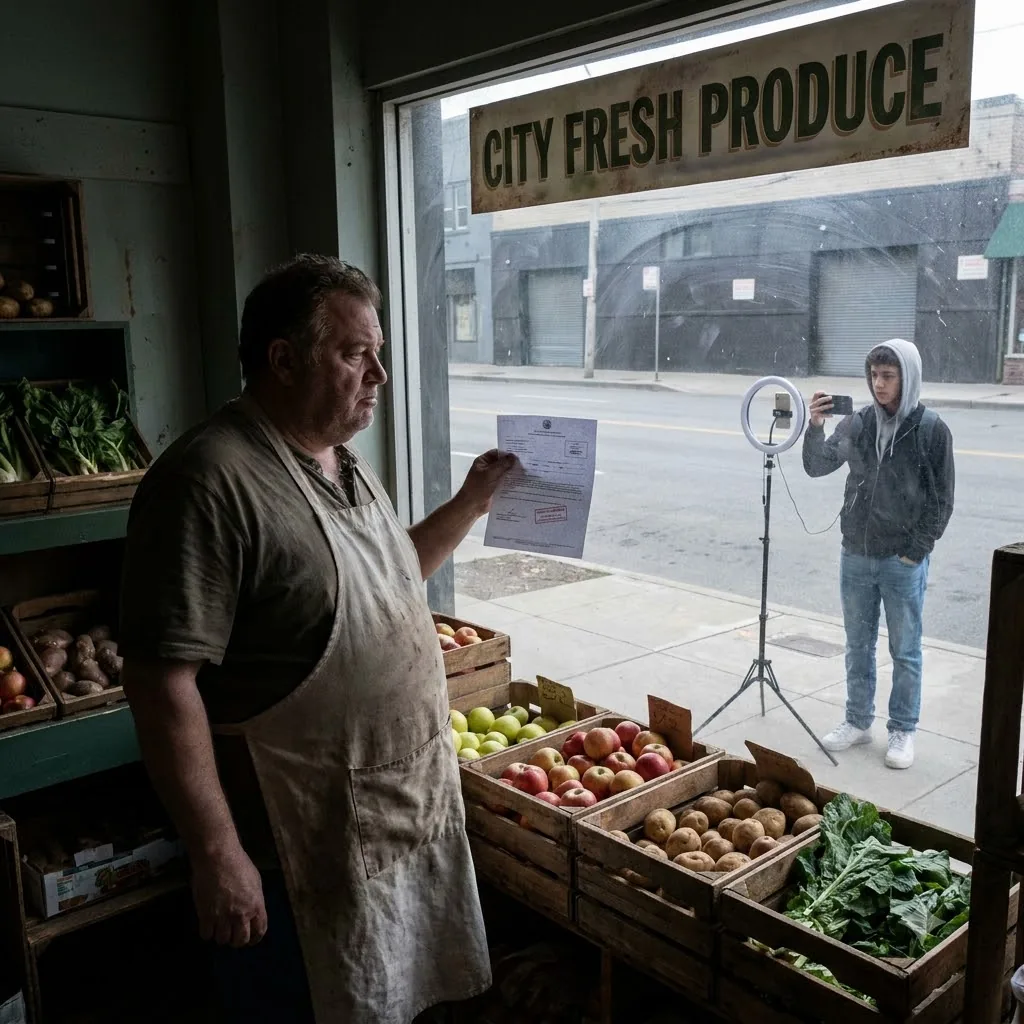
Marcus pressed his thumb over the raised, official city seal on his newly approved zoning permit, then looked up at the fifty crates of fresh produce sitting untouched on an unnaturally silent sidewalk. Distribution Tuesday was supposed to be a neighborhood triumph, the final victory after pouring his entire life savings into legalizing the block’s only food bank. He expected a line stretching all the way to the corner bodega. Instead, the street in front of his neatly arranged folding tables was completely deserted.
He stepped out through the open glass doors of the pantry, listening for the usual morning chatter of Mrs. Gable’s daycare group or the shuffling footsteps of the seniors from the high-rise down the avenue. There was only a heavy, suffocating quiet hanging in the muggy air.
Marcus walked past the towering, colorful stacks of green bell peppers, sweet potatoes, and vine-ripened tomatoes. The metal barricades he had rented to manage the expected crowds stood empty, gleaming uselessly in the morning sun. Across the street, the bodega’s rolling metal security gate was pulled halfway down. The owner, a man who reliably sat outside on a plastic milk crate reading the newspaper all day, was nowhere in sight. Marcus glanced up at the brownstone windows across the avenue. Blinds twitched. Someone parted a floral curtain on the second floor, met Marcus’s eyes for a fraction of a second, and immediately let the fabric fall shut.
The neighborhood was hiding.
A sharp, metallic clatter broke the quiet. The noise originated from the narrow alleyway separating the pantry from the abandoned laundromat next door. Marcus folded the thick permit paper, slipped it into his back pocket, and moved toward the edge of the brick wall. He kept his footsteps slow and deliberate. The air grew thick with a sudden, localized tension, shattered a second later by a booming, distorted bassline bleeding heavily from a portable speaker.
He rounded the corner and froze.
The space between the buildings had been violently commandeered. A teenager wearing a black ski mask and a bulky, military-style tactical vest stood dead center in the alley, shouting aggressive, rhythmic threats into a smartphone mounted on a tall ring-light tripod. Three other young men in matching dark hoodies and masks flanked him, throwing violent hand signs and aggressively kicking at the stray produce boxes Marcus had stacked near the side loading door.
The main teenager lunged toward the camera lens, pulling a heavy, metallic object from his waistband. He racked the slide with a sharp crack that echoed harshly off the brick walls, waving the black steel in perfect time with the punishing, aggressive beat.
Marcus felt his chest tighten into a knot. This was a drill rap video, being filmed directly against the side of his building on the exact day his operational permit went active. He stared at the heavy firearm swinging wildly in the teenager’s grip. The boy’s finger hovered dangerously close to the trigger guard as he bounced on the balls of his feet, screaming explicit lyrics about block wars and immediate retaliation.
If a patrol car turned the corner right now, the police would not see a legalized food bank. They would see a heavily armed gathering, tactical gear, and a handgun brandished inches from crates of community food. The city zoning board had fought Marcus for eight agonizing months, repeatedly claiming his pantry would draw chaos and criminal loitering to the area. They had demanded extensive background checks, expensive security plans, and thousands in non-refundable licensing fees. If a live video surfaced showing an armed teenager turning the pantry’s loading zone into a staging ground for a gang broadcast, the hard-won permit currently sitting in his pocket would be permanently revoked by sundown.
The dancers grew more erratic and destructive. One of the masked boys grabbed a wooden crate of navel oranges, hoisted it high over his head, and slammed it onto the concrete to punctuate a shouted lyric. Bright orange fruit spilled into the dirty gutters, crushed instantly beneath heavy black boots as the boys jumped in unison.
Marcus watched the expensive produce he had driven four hours to secure turn into wet debris. He needed to clear the block immediately, but shouting from the sidelines would only make him a target. The teenager in the tactical vest was entirely focused on the glowing red recording light of his phone, hyping himself into a frenzy, shoving the muzzle of his weapon directly at the glass lens to intimidate his digital audience. The boy was putting on a dangerous show, desperate to look entirely unpredictable and lethal to whoever was watching on the other side of the screen.
Marcus stepped out from the cover of the brick wall.
He did not run, and he did not shout. He walked in a straight, unyielding line toward the glaring ring light. The masked teens on the periphery noticed him first. They stopped jumping abruptly, their postures stiffening, hands dropping instinctively toward their own pockets. The main rapper, staring violently into his own reflection on the phone screen, kept shouting his violent cadence, completely oblivious to the man approaching quickly from his blind spot.
Marcus ignored the secondary boys. He ignored the heavy black handgun swinging violently through the air. He stepped directly into the center of the makeshift set, crossing straight into the camera’s blinding white light, and slammed his open palm flat against the lens.
Marcus pressed his thumb over the raised, official city seal on his newly approved zoning permit, then looked up at the fifty crates of fresh produce sitting untouched on an unnaturally silent sidewalk. Distribution Tuesday was supposed to be a neighborhood triumph, the final victory after pouring his entire life savings into legalizing the block’s only food bank. He expected a line stretching all the way to the corner bodega. Instead, the street in front of his neatly arranged folding tables was completely deserted.
He stepped out through the open glass doors of the pantry, listening for the usual morning chatter of Mrs. Gable’s daycare group or the shuffling footsteps of the seniors from the high-rise down the avenue. There was only a heavy, suffocating quiet hanging in the muggy air.
Marcus walked past the towering, colorful stacks of green bell peppers, sweet potatoes, and vine-ripened tomatoes. The metal barricades he had rented to manage the expected crowds stood empty, gleaming uselessly in the morning sun. Across the street, the bodega’s rolling metal security gate was pulled halfway down. The owner, a man who reliably sat outside on a plastic milk crate reading the newspaper all day, was nowhere in sight. Marcus glanced up at the brownstone windows across the avenue. Blinds twitched. Someone parted a floral curtain on the second floor, met Marcus’s eyes for a fraction of a second, and immediately let the fabric fall shut.
The neighborhood was hiding.
A sharp, metallic clatter broke the quiet. The noise originated from the narrow alleyway separating the pantry from the abandoned laundromat next door. Marcus folded the thick permit paper, slipped it into his back pocket, and moved toward the edge of the brick wall. He kept his footsteps slow and deliberate. The air grew thick with a sudden, localized tension, shattered a second later by a booming, distorted bassline bleeding heavily from a portable speaker.
He rounded the corner and froze.
The space between the buildings had been violently commandeered. A teenager wearing a black ski mask and a bulky, military-style tactical vest stood dead center in the alley, shouting aggressive, rhythmic threats into a smartphone mounted on a tall ring-light tripod. Three other young men in matching dark hoodies and masks flanked him, throwing violent hand signs and aggressively kicking at the stray produce boxes Marcus had stacked near the side loading door.
The main teenager lunged toward the camera lens, pulling a heavy, metallic object from his waistband. He racked the slide with a sharp crack that echoed harshly off the brick walls, waving the black steel in perfect time with the punishing, aggressive beat.
Marcus felt his chest tighten into a knot. This was a drill rap video, being filmed directly against the side of his building on the exact day his operational permit went active. He stared at the heavy firearm swinging wildly in the teenager’s grip. The boy’s finger hovered dangerously close to the trigger guard as he bounced on the balls of his feet, screaming explicit lyrics about block wars and immediate retaliation.
If a patrol car turned the corner right now, the police would not see a legalized food bank. They would see a heavily armed gathering, tactical gear, and a handgun brandished inches from crates of community food. The city zoning board had fought Marcus for eight agonizing months, repeatedly claiming his pantry would draw chaos and criminal loitering to the area. They had demanded extensive background checks, expensive security plans, and thousands in non-refundable licensing fees. If a live video surfaced showing an armed teenager turning the pantry’s loading zone into a staging ground for a gang broadcast, the hard-won permit currently sitting in his pocket would be permanently revoked by sundown.
The dancers grew more erratic and destructive. One of the masked boys grabbed a wooden crate of navel oranges, hoisted it high over his head, and slammed it onto the concrete to punctuate a shouted lyric. Bright orange fruit spilled into the dirty gutters, crushed instantly beneath heavy black boots as the boys jumped in unison.
Marcus watched the expensive produce he had driven four hours to secure turn into wet debris. He needed to clear the block immediately, but shouting from the sidelines would only make him a target. The teenager in the tactical vest was entirely focused on the glowing red recording light of his phone, hyping himself into a frenzy, shoving the muzzle of his weapon directly at the glass lens to intimidate his digital audience. The boy was putting on a dangerous show, desperate to look entirely unpredictable and lethal to whoever was watching on the other side of the screen.
Marcus stepped out from the cover of the brick wall.
He did not run, and he did not shout. He walked in a straight, unyielding line toward the glaring ring light. The masked teens on the periphery noticed him first. They stopped jumping abruptly, their postures stiffening, hands dropping instinctively toward their own pockets. The main rapper, staring violently into his own reflection on the phone screen, kept shouting his violent cadence, completely oblivious to the man approaching quickly from his blind spot.
Marcus ignored the secondary boys. He ignored the heavy black handgun swinging violently through the air. He stepped directly into the center of the makeshift set, crossing straight into the camera’s blinding white light, and slammed his open palm flat against the lens.