Story code: ST-001252
Part 1: The Quota
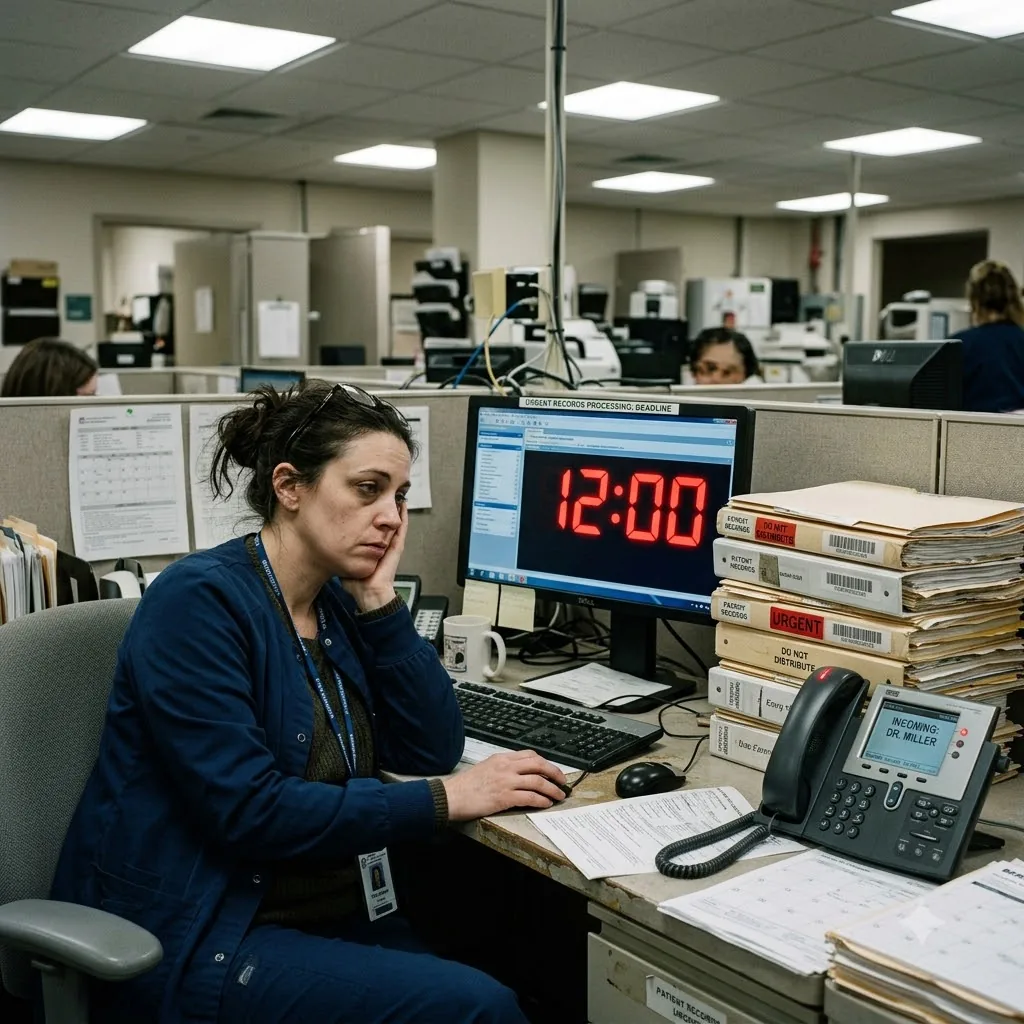
The digital timer in the top right corner of Marka’s dual-monitor setup flashed red at 01:42. One minute and forty-two seconds remained to clear claim file 8894-Alpha before her daily completion metric took a critical hit. She blinked hard against the dry grit in her eyes and scrolled past three hundred pages of fragmented medical history. Her right wrist throbbed with a deep ache, the cumulative toll of four years spent executing thousands of repetitive mouse clicks.
This veteran had submitted a complex opioid dependency claim. The file traced a brutal line from a documented shrapnel wound sustained in Kandahar to a severe prescription spiral. The VA’s automated triage system did not care about combat trauma. It cared strictly about Form 21-4138.
Marka typed the required form number into the document index. Zero results populated. The system required that specific statement to proceed. Without it, the dependency was automatically reclassified as a non-service-connected behavioral issue. Her index finger hovered over the left mouse button.
The timer ticked down to forty-five seconds. If she dug into the barely legible handwritten notes from the field hospital, she might find a doctor’s admission that functioned as a legal substitute. Finding it would take at least twenty minutes. Her dashboard displayed a daily clearance rate of eighty-nine percent. Management mandated a strict ninety-five percent baseline.
She clicked the red box labeled ‘Deficient Documentation’ and selected ‘Denial – Code 4’. Instantly, an automated denial letter generated in the system, pulling the veteran’s mailing address in Cleveland. The boilerplate text offered sterile legal parameters explaining the immediate termination of pain management benefits. Marka clicked ‘Execute and Close’.
The timer instantly reset to 12:00. Her metric bumped up to ninety percent. She exhaled a breath that tasted like stale coffee. The physical exhaustion of this job was the crushing, quiet weight of rubber-stamping human misery at high speed.
A new file auto-loaded. Claim 8895-Bravo. The summary showed another shattered spine, followed by another request for an out-of-network pain management authorization. She rubbed her temples, trying to block out the low hum of the fluorescent lights and the relentless clicking of forty other adjusters in the open-plan bullpen. The countdown began again.
Then her desk phone rang.
Marka froze with her hand suspended over the mouse. The sound was a jarring, shrill mechanical ring cutting straight through the muffled white noise of the claims floor. Nobody ever called the physical desk phones. All internal communication moved exclusively through the encrypted desktop messaging client. External calls routed automatically to the public call center in Omaha. The black plastic phone sat next to her docking station, meant only for building evacuation alerts.
It rang a second time. A few adjusters in the neighboring cubicles paused their clicking, glancing over the gray fabric partitions.
Marka pulled her hand away from the mouse, picked up the heavy receiver, and pressed it to her ear. She announced her name in a low voice.
A heavy, ragged breath rattled across the line. It was Miller, the head of building security stationed at the ground-floor metal detectors. His voice lacked its usual bored drawl. He spoke in a clipped, urgent cadence.
He told her to step away from her terminal immediately.
Marka looked at her glowing screen. The timer ticked down to ten minutes flat. She informed Miller that she was in the middle of a strict quota block.
Miller ignored her statement. He announced they had just initiated a full lockdown of the main lobby. The reinforced glass doors were magnetically sealed, and armed Federal Protective Service officers were en route.
Marka gripped the coiled phone cord and demanded an explanation.
Miller stated a man had just bypassed the exterior security perimeter by driving a modified heavy-duty pickup truck directly over the concrete bollards. The vehicle was now wedged firmly inside the shattered revolving doors. The driver had exited the truck and was standing in the exact center of the lobby. He held a red manila folder in his left hand and a heavy military canvas duffel bag in his right.
Miller explained the man was not shouting or making demands. He was completely silent, holding up a single sheet of paper against the bulletproof glass of the main security kiosk. It was an automated denial letter, printed on standard VA letterhead.
Miller read the details over the phone. The letter featured Marka’s specific employee identification code stamped at the bottom.
The security chief told Marka the man was staring directly up at the ceiling security camera, tapping his finger against her ID number. He then relayed the final detail from the camera feed. The canvas duffel bag at the man’s feet was leaking a steady, thick stream of dark fluid onto the polished marble floor.
The digital timer in the top right corner of Marka’s dual-monitor setup flashed red at 01:42. One minute and forty-two seconds remained to clear claim file 8894-Alpha before her daily completion metric took a critical hit. She blinked hard against the dry grit in her eyes and scrolled past three hundred pages of fragmented medical history. Her right wrist throbbed with a deep ache, the cumulative toll of four years spent executing thousands of repetitive mouse clicks.
This veteran had submitted a complex opioid dependency claim. The file traced a brutal line from a documented shrapnel wound sustained in Kandahar to a severe prescription spiral. The VA’s automated triage system did not care about combat trauma. It cared strictly about Form 21-4138.
Marka typed the required form number into the document index. Zero results populated. The system required that specific statement to proceed. Without it, the dependency was automatically reclassified as a non-service-connected behavioral issue. Her index finger hovered over the left mouse button.
The timer ticked down to forty-five seconds. If she dug into the barely legible handwritten notes from the field hospital, she might find a doctor’s admission that functioned as a legal substitute. Finding it would take at least twenty minutes. Her dashboard displayed a daily clearance rate of eighty-nine percent. Management mandated a strict ninety-five percent baseline.
She clicked the red box labeled ‘Deficient Documentation’ and selected ‘Denial – Code 4’. Instantly, an automated denial letter generated in the system, pulling the veteran’s mailing address in Cleveland. The boilerplate text offered sterile legal parameters explaining the immediate termination of pain management benefits. Marka clicked ‘Execute and Close’.
The timer instantly reset to 12:00. Her metric bumped up to ninety percent. She exhaled a breath that tasted like stale coffee. The physical exhaustion of this job was the crushing, quiet weight of rubber-stamping human misery at high speed.
A new file auto-loaded. Claim 8895-Bravo. The summary showed another shattered spine, followed by another request for an out-of-network pain management authorization. She rubbed her temples, trying to block out the low hum of the fluorescent lights and the relentless clicking of forty other adjusters in the open-plan bullpen. The countdown began again.
Then her desk phone rang.
Marka froze with her hand suspended over the mouse. The sound was a jarring, shrill mechanical ring cutting straight through the muffled white noise of the claims floor. Nobody ever called the physical desk phones. All internal communication moved exclusively through the encrypted desktop messaging client. External calls routed automatically to the public call center in Omaha. The black plastic phone sat next to her docking station, meant only for building evacuation alerts.
It rang a second time. A few adjusters in the neighboring cubicles paused their clicking, glancing over the gray fabric partitions.
Marka pulled her hand away from the mouse, picked up the heavy receiver, and pressed it to her ear. She announced her name in a low voice.
A heavy, ragged breath rattled across the line. It was Miller, the head of building security stationed at the ground-floor metal detectors. His voice lacked its usual bored drawl. He spoke in a clipped, urgent cadence.
He told her to step away from her terminal immediately.
Marka looked at her glowing screen. The timer ticked down to ten minutes flat. She informed Miller that she was in the middle of a strict quota block.
Miller ignored her statement. He announced they had just initiated a full lockdown of the main lobby. The reinforced glass doors were magnetically sealed, and armed Federal Protective Service officers were en route.
Marka gripped the coiled phone cord and demanded an explanation.
Miller stated a man had just bypassed the exterior security perimeter by driving a modified heavy-duty pickup truck directly over the concrete bollards. The vehicle was now wedged firmly inside the shattered revolving doors. The driver had exited the truck and was standing in the exact center of the lobby. He held a red manila folder in his left hand and a heavy military canvas duffel bag in his right.
Miller explained the man was not shouting or making demands. He was completely silent, holding up a single sheet of paper against the bulletproof glass of the main security kiosk. It was an automated denial letter, printed on standard VA letterhead.
Miller read the details over the phone. The letter featured Marka’s specific employee identification code stamped at the bottom.
The security chief told Marka the man was staring directly up at the ceiling security camera, tapping his finger against her ID number. He then relayed the final detail from the camera feed. The canvas duffel bag at the man’s feet was leaking a steady, thick stream of dark fluid onto the polished marble floor.