Story code: ST-001252
Part 4: The Reset
Through the headset, the silence from the lobby was absolute, save for the wet, rhythmic dripping of gasoline leaking from the canvas bag. Marka waited. She didn’t breathe. Her index finger rested against the plastic edge of her mouse.
“You just clicked a box,” David whispered. The fight had drained completely from his voice, replaced by a hollow, staggering realization. “You didn’t even read his name.”
“I didn’t,” Marka said.
“I wanted a villain.” The scrape of a heavy boot on polished marble echoed through the line. “I wanted someone to burn for this. But there’s nobody down here. It’s just a room full of people clicking boxes.”
“Yes.”
Through the earpiece, Marka heard the heavy, distinct *thud* of the unlit road flare hitting the floor. It rolled away, the hollow plastic sound rattling against the stone.
Then, a new sound shattered the quiet. The violent groan of stressed metal, followed by the sharp, concussive shatter of tempered glass.
“Federal Protective Service! Show me your hands!”
The voice was panicked, pitched high with adrenaline. It wasn’t Miller. It was an outside tactical officer who had just breached the perimeter.
“Wait,” David said, his voice turning sharply toward the source of the noise. “I dropped it. I don’t have-”
“Step away from the fuel! Show me your hands!”
“I said I dropped it!”
“He’s got a detonator!” a second officer screamed. “The phone in his hand!”
“No, I’m talking to-”
Three sharp, deafening cracks erupted through the softphone client.
Marka flinched, ripping the headset away from her ear, but the sound had already drilled into her skull. It was followed by the heavy, wet sound of a body collapsing onto the marble floor. Then, chaotic shouting filled the line.
“Suspect down! Get the foam extinguishers! Secure the bag!”
Marka stared at the softphone client on her screen. The call timer ticked forward. 04:12. 04:13. She reached out with a trembling hand and clicked the red receiver icon. The line disconnected.
Above her, the silent white strobe lights abruptly stopped flashing. The heavy, magnetic deadbolts on the fire doors disengaged with a synchronized, heavy clack. The lockdown was over.
Todd slowly uncurled from his crouch beside her desk. He wiped his sweaty palms on his pastel polo shirt, staring at Marka with wide, terrified eyes. He didn’t ask what happened. He just looked at her screen, then at the headset resting on her desk.
Two hours later, Marka sat in a windowless conference room on the third floor. The walls were painted a sterile, non-confrontational beige. Across the laminate table sat a woman from Regional Human Resources and a man from the legal liability department. Neither of them had offered Marka a glass of water.
The HR representative slid a single sheet of paper across the table. It was a Critical Incident Debriefing form.
“The police have secured the lobby,” the legal representative said, his voice flat and practiced. “The situation is contained. Building management has brought in a hazmat crew to clear the accelerant. We will be operating on a modified schedule tomorrow, but the main floor remains strictly open.”
Marka looked at the form. It required her signature next to a boilerplate paragraph confirming she had utilized the company’s mandated de-escalation scripts during the incident.
“The intruder was neutralized before he could ignite the lobby,” the HR woman said smoothly. She tapped a pen against the table. “You kept him on the line. You followed the Hostile Claimant Protocol. We pulled the audio logs from your softphone. However, due to the highly sensitive nature of the event, Legal has determined that the audio file will be permanently sealed under an active security investigation.”
They were burying it. They had heard her confession on the recording. They had heard the truth about the quota, the automated denial, the forty-five seconds it took to ruin Elias Thorne’s life. And they were erasing it to protect the algorithm’s liability footprint.
“Sign the form, Marka,” the HR representative said gently. “We have also authorized a one-time removal of the metric penalty you incurred for suspending Claim 8895-Bravo. Your clearance rate will not be affected by this disruption.”
Marka stared at the pen. She looked at her right wrist, still aching with a dull, familiar throb. If she didn’t sign, she would be terminated for violating protocol. She would lose her health insurance. She would lose her apartment. She would become a file in someone else’s queue.
She picked up the pen and signed her name.
The HR woman smiled, pulling the paper back. “Thank you. There is an EAP pamphlet in your inbox if you need to speak with a trauma counselor. They are allotted in fifteen-minute increments.”
Marka stood up and walked out of the conference room. She walked down the hallway, past the elevators, and re-entered the expansive bullpen. The white noise generators hummed steadily from the ceiling. Forty other adjusters were back at their desks, their headsets on, clicking relentlessly through their queues.
She walked to her cubicle and sat in her ergonomic chair. She placed her right hand on the mouse.
On her left monitor, the legacy database archive had automatically timed out and logged her off. Elias Thorne’s locked file was gone, swallowed back into the impenetrable depths of the server.
On her right monitor, the yellow warning banner had vanished. The system had cleared the suspension.
Claim 8895-Bravo loaded onto the screen. The summary detailed a shattered spine, requesting an out-of-network pain management authorization.
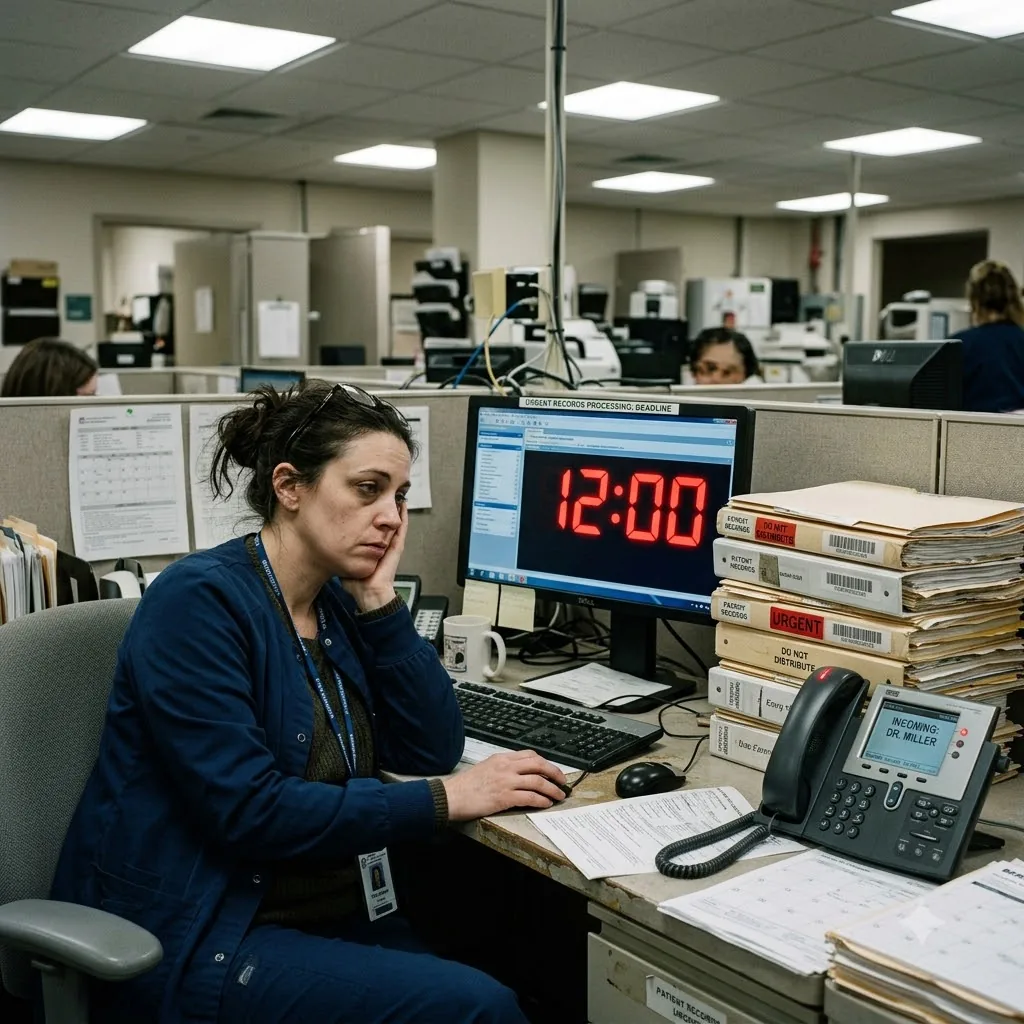
In the top right corner, the digital timer blinked, resetting patiently to 12:00.
Marka clicked the document index and typed the required form number. The countdown began.