Story code: ST-001170
Part 4: Clear Traffic
I didn’t need to press an emergency override pedal to summon the police to the Oakhaven Community Center. The HOA president, a man who just three weeks prior had parked his pristine SUV across a public intersection to block a patrol cruiser, dialed 911 himself.
The arrival of the authorities was remarkably quiet. There was no coordinated phone tree attack this time. There were no civilians forming human barricades in the street. The men who had proudly worn neon yellow reflective vests to patrol their borders stood silently by the folding chairs, their eyes glued to the linoleum floor, wanting absolutely nothing to do with the woman at the podium.
Brenda Vance did not scream when the two sector officers walked through the double doors. The righteous, commanding edge had completely drained from her voice. She looked small, frail, and terrified as they asked her to turn around and place her hands behind her back. I watched from the third row as the silver cuffs clicked shut over the sleeves of her cream-colored turtleneck. The local paper published the official charges the following morning: aggravated assault with a deadly weapon and felony misuse of an emergency communications system. The coordinated 911 DDoS attack had caught the attention of the state attorney, and they were making a very public example out of her.
My own consequences arrived three days later in a stiff manila envelope, delivered by certified mail.
The city did not care about the moral victory. The city, and the HR department that governed my employment, cared strictly about liability, protocol, and data privacy. I had bypassed a physical kill-switch on my console. I had dumped encrypted CAD audio onto an unauthorized personal flash drive. I had leaked city property at a civilian HOA meeting.
The letter informed me that my status was officially changed to indefinite administrative leave without pay, pending a final disciplinary hearing.
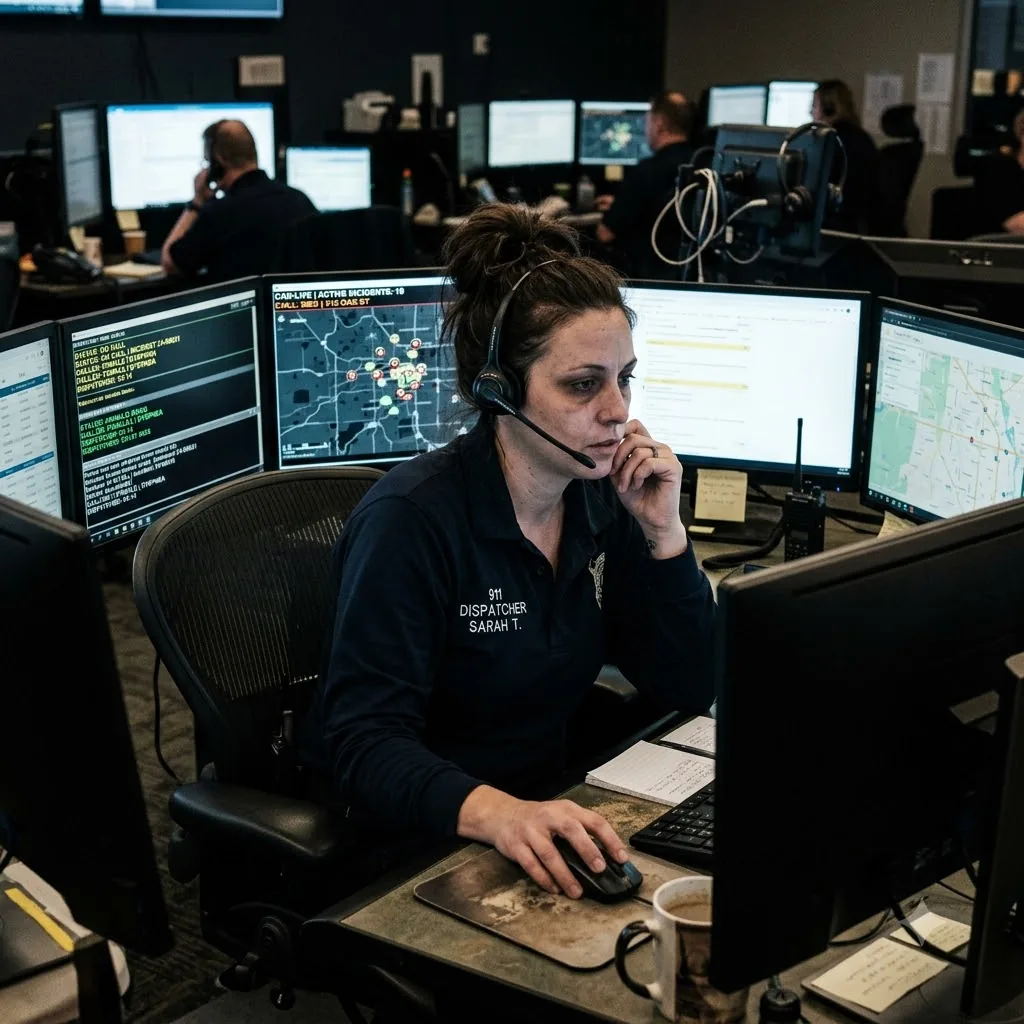
The termination of my salary was immediate. I lost my health insurance. I lost my union protection. Most terrifyingly, I lost the steady, predictable income that kept me in my one-bedroom apartment. For five years, my entire existence had been narrowed down to the sterile glow of dual monitors and the guaranteed direct deposit on the first and fifteenth of every month. Now, the screens in my life were just my phone, displaying a checking account balance that was dropping with terrifying speed.
To keep the lights on and the landlord away, I had to swallow my pride and download a gig-economy courier app. Which is how, one month after I unplugged my headset for the last time, I found myself navigating a battered Honda Civic back into sector four.
The GPS on my dashboard chimed, routing me down Oakhaven Drive.
My chest tightened reflexively as I turned past the heavy elm trees that marked the entrance to the subdivision. I half-expected to see the yellow vests. I expected the cold, suspicious stares of residents mapping my perimeter. I expected the suffocating, electrified paranoia that Brenda had cultivated so carefully.
Instead, the street was remarkably, beautifully mundane.
A teenager was pushing a loud electric mower across a front lawn. An older man was dragging plastic garbage bins to the curb. I slowed the Civic to a crawl, checking the house numbers against the app on my phone. I pulled over directly across the street from Brenda’s empty house. The front curtains were drawn tight, and the driveway was bare.
I picked up the cardboard box from my passenger seat. It wasn’t a router; it was a bag of premium dog food, heavy and awkwardly shaped. I carried it up the walkway to the Adams house-the very house Brenda had sworn the nineteen-year-old kid was casing.
I didn’t look over my shoulder. No one shouted from a porch. No heavy, metallic slide racked in the distance. The only sound was the distant hum of a lawnmower and the gentle rustle of the wind through the elm leaves.
I set the box down on the porch, snapped a photo for the app, and walked back to my car.
When I slid into the driver’s seat, I didn’t turn the engine on right away. I sat in the quiet cab of the Civic and took a deep breath. My bank account was nearly empty. My career in emergency services was permanently over. The foam pads of the dispatch headset were gone, and the dark, compressed world of the 911 center was closed to me forever.
But as I watched another unbranded delivery van turn onto the block, slowing down to safely drop off a package without a single resident rushing out to intercept it, the heavy knot of tension in my lower back finally dissolved. The open line was disconnected. The neighborhood was just a neighborhood again. And for the first time in five years, I could finally hear the quiet.