Story code: ST-000931
Part 1: The Agenda
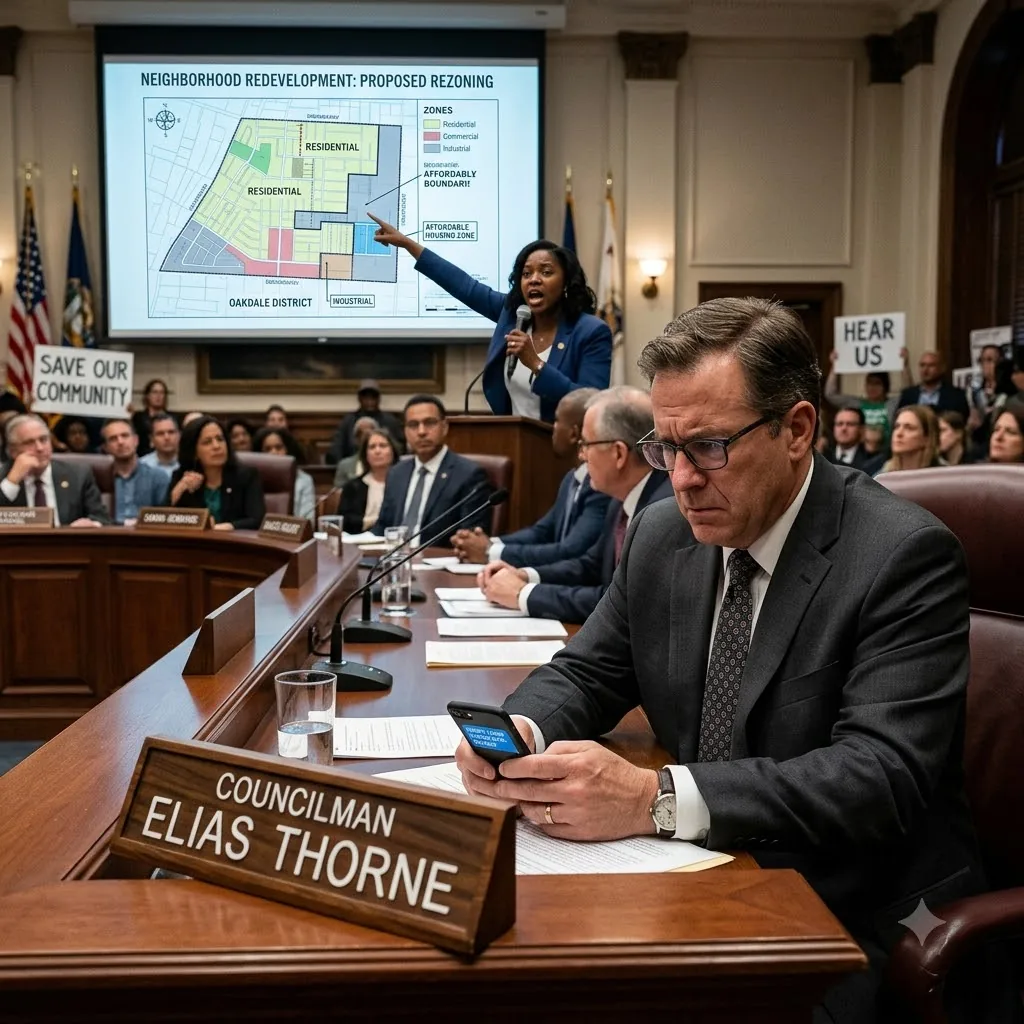
Marcus leaned into his microphone and arranged his features into a mask of deep, empathetic concern as the tenant organizer at the podium detailed the miseries of gentrification. Beneath the heavy oak dais, his thumb swiped across his phone screen to finalize a twelve-percent rent increase across all three of his secretly managed LLC properties. The organizer, a young woman in a frayed denim jacket, pointed directly at the council bench to demand rent control measures. Marcus offered a slow, solemn nod of solidarity, maintaining steady eye contact with her while blindly tapping the confirmation button on his screen.
The juxtaposition was an art form he had perfected over two terms in office. Publicly, Councilman Marcus Thorne was the unwavering champion of the working class, a progressive firewall against corporate developers. Privately, his retirement plan relied entirely on maximizing the yield of his discreetly acquired real estate portfolio. He slipped the phone back into his suit pocket, keeping his posture attentive and respectful as the organizer finished her allotted three minutes. The chamber erupted in applause from the gallery. Marcus clapped along, making sure the local press photographer in the front row caught his supportive stance.
His pocket vibrated. It was a sharp, continuous buzz that signaled an emergency override from his property management software. He checked the screen, shielding the glow with his palm. The alert warned of a catastrophic plumbing failure at his Westside complex, demanding an immediate authorization for a forty-thousand-dollar emergency repair that would wipe out his quarterly margins. A cold spike of acid hit his stomach. He locked his jaw, staring at the exorbitant estimate, his meticulously constructed financial projections crumbling in real time. The timing was disastrous, threatening to expose his shell company if he had to seek outside credit to cover the shortfall.
He needed air, or at least five minutes in his office to make a frantic phone call. He shifted his chair back, preparing to signal the council president for a brief recess.
Before he could stand, the heavy wooden doors at the back of the chamber swung open.
A new figure marched down the center aisle, completely ignoring the procedural agenda displayed on the digital board above the mayor’s seat. It was Elena Rostova, the city’s most aggressive housing advocate, hauling a rolled-up presentation board under her arm. The council president banged her gavel, reminding Elena that public comment had concluded, but the microphone at the center podium was already in Elena’s grip.
She did not look at the mayor or the council president. She locked eyes with Marcus.
Elena unrolled the board and slammed it against the easel. It displayed a sprawling, detailed architectural rendering of a high-density micro-shelter village. The colorful mock-up showed tiny homes, communal hygiene stations, and a medical triage tent. Marcus studied the rendering, his political instincts evaluating the aesthetic appeal of the project. It was exactly the kind of bold, progressive initiative he usually sponsored to secure his voting base. He prepared to offer another one of his signature, supportive nods.
Then he looked at the street signs rendered in the architectural drawing.
The intersection displayed in bold, black lettering was the corner of Elmwood Drive and Kensington Way. It was the entrance to his own gated neighborhood, a hyper-affluent enclave of manicured lawns and historic estates. The proposed site was the vacant, city-owned acreage directly across the street from Marcus’s three-million-dollar primary residence.
Elena tapped the rendering with a heavy marker. She announced that the city had a moral obligation to integrate affordable emergency housing into high-resource neighborhoods, rather than dumping every facility into marginalized districts. She stated that Elmwood Drive was the perfect pilot location, boasting zero crime, excellent transit access, and a surplus of unused municipal land.
The gallery murmured, a mix of shock and rising excitement. The press photographer pivoted his lens away from Elena and aimed it squarely at Marcus.
Elena leaned into the microphone, her voice echoing through the vaulted ceiling. She declared that since Councilman Thorne was the most vocal supporter of emergency housing, she knew he would be thrilled to lead by example and welcome these displaced citizens into his own backyard.
Marcus stared at the map. His phone vibrated again with another alert about his hemorrhaging LLC funds, while the reality of his personal property value crashing from a micro-shelter across his driveway settled over him. The gallery waited in absolute silence for his response. He opened his mouth, staring into the blinding flash of the press camera.
Marcus leaned into his microphone and arranged his features into a mask of deep, empathetic concern as the tenant organizer at the podium detailed the miseries of gentrification. Beneath the heavy oak dais, his thumb swiped across his phone screen to finalize a twelve-percent rent increase across all three of his secretly managed LLC properties. The organizer, a young woman in a frayed denim jacket, pointed directly at the council bench to demand rent control measures. Marcus offered a slow, solemn nod of solidarity, maintaining steady eye contact with her while blindly tapping the confirmation button on his screen.
The juxtaposition was an art form he had perfected over two terms in office. Publicly, Councilman Marcus Thorne was the unwavering champion of the working class, a progressive firewall against corporate developers. Privately, his retirement plan relied entirely on maximizing the yield of his discreetly acquired real estate portfolio. He slipped the phone back into his suit pocket, keeping his posture attentive and respectful as the organizer finished her allotted three minutes. The chamber erupted in applause from the gallery. Marcus clapped along, making sure the local press photographer in the front row caught his supportive stance.
His pocket vibrated. It was a sharp, continuous buzz that signaled an emergency override from his property management software. He checked the screen, shielding the glow with his palm. The alert warned of a catastrophic plumbing failure at his Westside complex, demanding an immediate authorization for a forty-thousand-dollar emergency repair that would wipe out his quarterly margins. A cold spike of acid hit his stomach. He locked his jaw, staring at the exorbitant estimate, his meticulously constructed financial projections crumbling in real time. The timing was disastrous, threatening to expose his shell company if he had to seek outside credit to cover the shortfall.
He needed air, or at least five minutes in his office to make a frantic phone call. He shifted his chair back, preparing to signal the council president for a brief recess.
Before he could stand, the heavy wooden doors at the back of the chamber swung open.
A new figure marched down the center aisle, completely ignoring the procedural agenda displayed on the digital board above the mayor’s seat. It was Elena Rostova, the city’s most aggressive housing advocate, hauling a rolled-up presentation board under her arm. The council president banged her gavel, reminding Elena that public comment had concluded, but the microphone at the center podium was already in Elena’s grip.
She did not look at the mayor or the council president. She locked eyes with Marcus.
Elena unrolled the board and slammed it against the easel. It displayed a sprawling, detailed architectural rendering of a high-density micro-shelter village. The colorful mock-up showed tiny homes, communal hygiene stations, and a medical triage tent. Marcus studied the rendering, his political instincts evaluating the aesthetic appeal of the project. It was exactly the kind of bold, progressive initiative he usually sponsored to secure his voting base. He prepared to offer another one of his signature, supportive nods.
Then he looked at the street signs rendered in the architectural drawing.
The intersection displayed in bold, black lettering was the corner of Elmwood Drive and Kensington Way. It was the entrance to his own gated neighborhood, a hyper-affluent enclave of manicured lawns and historic estates. The proposed site was the vacant, city-owned acreage directly across the street from Marcus’s three-million-dollar primary residence.
Elena tapped the rendering with a heavy marker. She announced that the city had a moral obligation to integrate affordable emergency housing into high-resource neighborhoods, rather than dumping every facility into marginalized districts. She stated that Elmwood Drive was the perfect pilot location, boasting zero crime, excellent transit access, and a surplus of unused municipal land.
The gallery murmured, a mix of shock and rising excitement. The press photographer pivoted his lens away from Elena and aimed it squarely at Marcus.
Elena leaned into the microphone, her voice echoing through the vaulted ceiling. She declared that since Councilman Thorne was the most vocal supporter of emergency housing, she knew he would be thrilled to lead by example and welcome these displaced citizens into his own backyard.
Marcus stared at the map. His phone vibrated again with another alert about his hemorrhaging LLC funds, while the reality of his personal property value crashing from a micro-shelter across his driveway settled over him. The gallery waited in absolute silence for his response. He opened his mouth, staring into the blinding flash of the press camera.