Story code: ST-001574
Part 1: The Corner Is Gone Before Sunrise
Rosa saw the steel first.
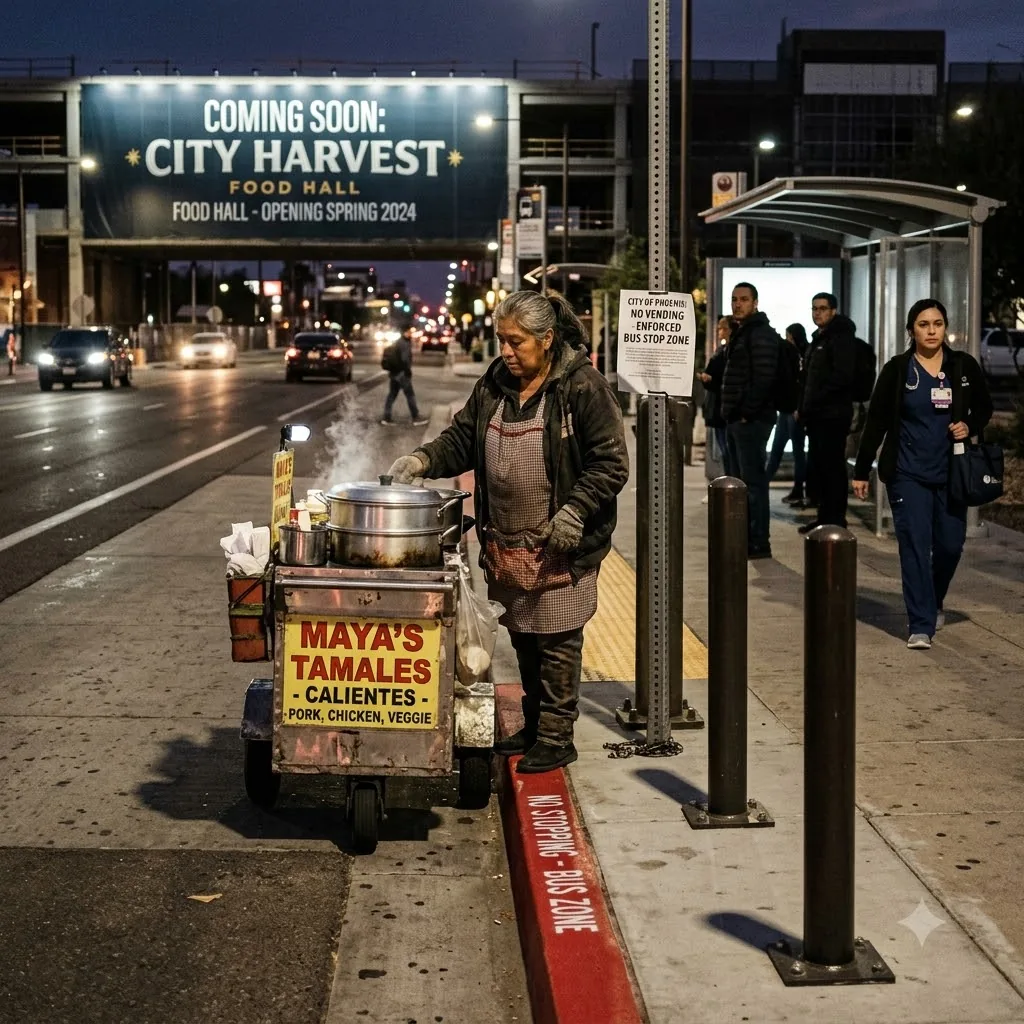
Not the sign, not the paint, not the folded paper snapping against the post. Just three new gray bollards planted along the curb where her cart always fit, shoulder to shoulder like they had grown there overnight. She stopped so hard the front wheel of the tamale cart knocked her shin, and the lidded pot inside answered with a dull slosh.
For a second she stayed in the street with both hands on the handle, staring at the place where she had stood for eleven years outside the hospital bus stop. The curb was bright red now, the paint still clean enough to catch the yellow light from the pharmacy sign across the avenue. NO STOPPING. NO STANDING. The letters looked too fresh, too certain. Above them, zip-tied to a pole at eye level, a folded notice flapped in the dark.
Her chain was still looped through the lower frame of the cart from where she had carried it from the garage, heavy against her wrist. She let it drop. The sound cracked louder than it should have in the hour before dawn.
A nurse in blue scrubs came hurrying from the bus shelter with a paper badge clipped to her jacket. “No tamales today.”
Rosa did not answer right away. She walked closer, leaving the cart half in the lane, and squinted at the notice. Official seal at the top. Dense block of print under it. A map or a box maybe, though the fold cut through the middle and the light was bad. English first. Smaller lines below in Spanish. She reached up, but the plastic tie held it flat and high.
The nurse slowed when she saw the red curb. “Oh,” she said, softer now.
By then two regulars from the first inbound bus had noticed the cart and started angling toward her out of habit, coffee in one hand, lunch money already ready in the other. A man in hospital housekeeping greens lifted his chin in greeting, then followed Rosa’s eyes to the bollards. His face changed in a small embarrassed way, as if he had walked into somebody else’s bad news.
“They just did that,” he said. “I was off yesterday.”
Rosa put her hand on the nearest bollard. The metal was cold and solid. No scrape marks around the base. No dust. Not temporary. Not cones. Not tape she could step around until someone in an office woke up.
Across the street, a man in a black puffer vest stood beside a parked SUV with his phone held chest-high. Not pointed directly at her, not exactly. He looked down when she looked at him, then tipped the phone a little and kept standing there.
The first bus sighed to the curb a half block down where it could still stop. People got off and drifted toward the hospital entrance, slowing when they saw Rosa stalled in the roadway with her cart. One woman mouthed, “What happened.” Another shook her head before Rosa could answer.
Rosa pulled the cart forward anyway, testing the gap between the bollards and the bus bench as if maybe she had remembered her own corner wrong after more than a decade of working it in the dark. There was no gap. The nearest wheel bumped the painted curb, then the steel, then stopped. She backed up, the pot sloshing again.
A white city pickup rolled into view from around the loading dock and parked with a tidy confidence near the crosswalk. Two people got out wearing reflective jackets. One carried a clipboard. The other had a tablet in a rubber case and a ring of keys clipped at the hip. They were not hurrying. They were arriving.
The man with the clipboard glanced once at Rosa’s cart, then at the notice on the pole, then back to her as if moving through steps already listed somewhere. “Ma’am,” he called. “You can’t set up here.”
“I have not set up,” Rosa said.
Her voice came out flatter than she wanted. She cleared her throat and nodded at the curb. “I came to work and this is here.”
The woman with the tablet stopped beside the bollards and tapped the screen with one finger. “This block is posted now. No vending in the red zone.”
“Posted when.”
The two city workers traded the tiny glance of people deciding which version to use. The man chose a mild one. “There should have been notice.”
Rosa pointed at the folded sheet. “That one tied up in the dark.”
He shifted the clipboard against his chest. “The area has been updated. If you begin service here you can be cited, and the cart can be subject to impound.”
The housekeeping worker, still lingering with exact change in his hand, took one step back. The nurse by the shelter looked down at her watch, then at Rosa, then finally left for the entrance without buying breakfast from anyone.
Rosa felt heat rise under her jacket. It was not just losing the spot. It was the way everybody around the curb seemed to know how to stand in relation to it already, as if this empty space had been rehearsed. Even the red paint looked settled in, claiming years instead of hours.
She tried again with the notice, stretching up to flatten the fold. The woman with the tablet said, “Please don’t remove posted material.”
“I am trying to read it.”
“I can explain it to you.”
“Then explain why you put steel in my place before sunrise.”
The man across the street still had his phone up. A bus rider noticed him and looked over, then quickly looked away. The city worker with the clipboard turned just enough to see him too, but said nothing.
Rosa planted her feet beside the shaft of the cart handle. “Who ordered this.”
“No one is discussing personnel,” the woman said. “What matters today is compliance.”
“Compliance with what. I have my permit in the sleeve. I have my food card. The hospital staff know me. The bus drivers know me. If this changed, somebody had to say something before this morning.”
The man with the clipboard opened it at last and slid out a printed page. “There is an appeals process if you believe there’s been an error.”
He held the paper out without stepping closer, like he did not want to enter the little circle around her cart. Rosa did not take it. Wind lifted one corner and showed a stamp, a date, a line of small boxes. Not an error. Paper ready before she even knew she needed paper.
A woman in pink scrubs came jogging from the far side of the avenue, breath white in the light, one hand raised. “Please tell me you have at least six left.”
She saw the city truck and slowed to a stop.
Rosa looked from the customer to the red curb to the folded notice and back to the clipboard in the inspector’s hand. “I want the name of the person who decided this because I have been here every weekday since before your truck ever started making this turn, and if you think you can just erase me with a zip tie and fresh paint, I will not stand here and let you pretend this is normal, I will-”
The woman with the tablet stepped in and reached for the cart handle.
Rosa saw the steel first.
Not the sign, not the paint, not the folded paper snapping against the post. Just three new gray bollards planted along the curb where her cart always fit, shoulder to shoulder like they had grown there overnight. She stopped so hard the front wheel of the tamale cart knocked her shin, and the lidded pot inside answered with a dull slosh.
For a second she stayed in the street with both hands on the handle, staring at the place where she had stood for eleven years outside the hospital bus stop. The curb was bright red now, the paint still clean enough to catch the yellow light from the pharmacy sign across the avenue. NO STOPPING. NO STANDING. The letters looked too fresh, too certain. Above them, zip-tied to a pole at eye level, a folded notice flapped in the dark.
Her chain was still looped through the lower frame of the cart from where she had carried it from the garage, heavy against her wrist. She let it drop. The sound cracked louder than it should have in the hour before dawn.
A nurse in blue scrubs came hurrying from the bus shelter with a paper badge clipped to her jacket. “No tamales today.”
Rosa did not answer right away. She walked closer, leaving the cart half in the lane, and squinted at the notice. Official seal at the top. Dense block of print under it. A map or a box maybe, though the fold cut through the middle and the light was bad. English first. Smaller lines below in Spanish. She reached up, but the plastic tie held it flat and high.
The nurse slowed when she saw the red curb. “Oh,” she said, softer now.
By then two regulars from the first inbound bus had noticed the cart and started angling toward her out of habit, coffee in one hand, lunch money already ready in the other. A man in hospital housekeeping greens lifted his chin in greeting, then followed Rosa’s eyes to the bollards. His face changed in a small embarrassed way, as if he had walked into somebody else’s bad news.
“They just did that,” he said. “I was off yesterday.”
Rosa put her hand on the nearest bollard. The metal was cold and solid. No scrape marks around the base. No dust. Not temporary. Not cones. Not tape she could step around until someone in an office woke up.
Across the street, a man in a black puffer vest stood beside a parked SUV with his phone held chest-high. Not pointed directly at her, not exactly. He looked down when she looked at him, then tipped the phone a little and kept standing there.
The first bus sighed to the curb a half block down where it could still stop. People got off and drifted toward the hospital entrance, slowing when they saw Rosa stalled in the roadway with her cart. One woman mouthed, “What happened.” Another shook her head before Rosa could answer.
Rosa pulled the cart forward anyway, testing the gap between the bollards and the bus bench as if maybe she had remembered her own corner wrong after more than a decade of working it in the dark. There was no gap. The nearest wheel bumped the painted curb, then the steel, then stopped. She backed up, the pot sloshing again.
A white city pickup rolled into view from around the loading dock and parked with a tidy confidence near the crosswalk. Two people got out wearing reflective jackets. One carried a clipboard. The other had a tablet in a rubber case and a ring of keys clipped at the hip. They were not hurrying. They were arriving.
The man with the clipboard glanced once at Rosa’s cart, then at the notice on the pole, then back to her as if moving through steps already listed somewhere. “Ma’am,” he called. “You can’t set up here.”
“I have not set up,” Rosa said.
Her voice came out flatter than she wanted. She cleared her throat and nodded at the curb. “I came to work and this is here.”
The woman with the tablet stopped beside the bollards and tapped the screen with one finger. “This block is posted now. No vending in the red zone.”
“Posted when.”
The two city workers traded the tiny glance of people deciding which version to use. The man chose a mild one. “There should have been notice.”
Rosa pointed at the folded sheet. “That one tied up in the dark.”
He shifted the clipboard against his chest. “The area has been updated. If you begin service here you can be cited, and the cart can be subject to impound.”
The housekeeping worker, still lingering with exact change in his hand, took one step back. The nurse by the shelter looked down at her watch, then at Rosa, then finally left for the entrance without buying breakfast from anyone.
Rosa felt heat rise under her jacket. It was not just losing the spot. It was the way everybody around the curb seemed to know how to stand in relation to it already, as if this empty space had been rehearsed. Even the red paint looked settled in, claiming years instead of hours.
She tried again with the notice, stretching up to flatten the fold. The woman with the tablet said, “Please don’t remove posted material.”
“I am trying to read it.”
“I can explain it to you.”
“Then explain why you put steel in my place before sunrise.”
The man across the street still had his phone up. A bus rider noticed him and looked over, then quickly looked away. The city worker with the clipboard turned just enough to see him too, but said nothing.
Rosa planted her feet beside the shaft of the cart handle. “Who ordered this.”
“No one is discussing personnel,” the woman said. “What matters today is compliance.”
“Compliance with what. I have my permit in the sleeve. I have my food card. The hospital staff know me. The bus drivers know me. If this changed, somebody had to say something before this morning.”
The man with the clipboard opened it at last and slid out a printed page. “There is an appeals process if you believe there’s been an error.”
He held the paper out without stepping closer, like he did not want to enter the little circle around her cart. Rosa did not take it. Wind lifted one corner and showed a stamp, a date, a line of small boxes. Not an error. Paper ready before she even knew she needed paper.
A woman in pink scrubs came jogging from the far side of the avenue, breath white in the light, one hand raised. “Please tell me you have at least six left.”
She saw the city truck and slowed to a stop.
Rosa looked from the customer to the red curb to the folded notice and back to the clipboard in the inspector’s hand. “I want the name of the person who decided this because I have been here every weekday since before your truck ever started making this turn, and if you think you can just erase me with a zip tie and fresh paint, I will not stand here and let you pretend this is normal, I will-”
The woman with the tablet stepped in and reached for the cart handle.